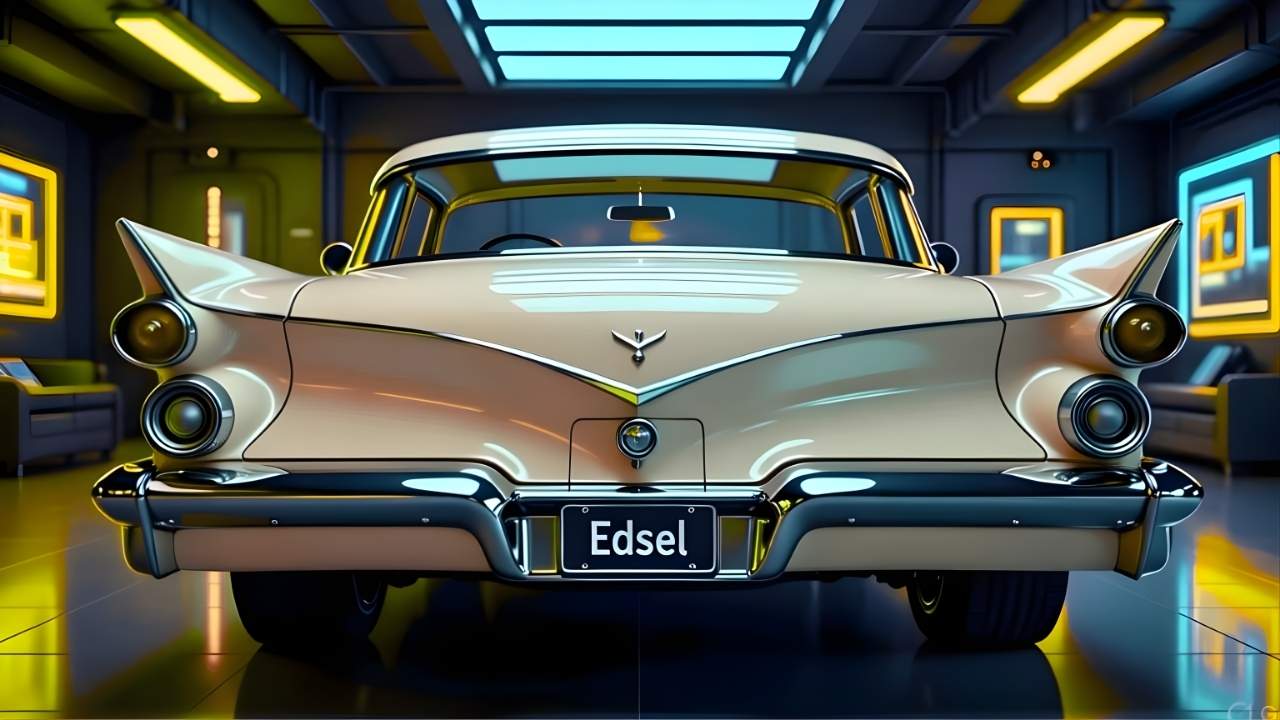
The 1958 Edsel Corsair stands as one of the most fascinating chapters in automotive history. Conceived with bold ambition and backed by one of America’s most powerful carmakers, the Corsair was meant to redefine the mid-price market. Instead, it became a lasting symbol of how high expectations, misjudged design choices, and unfortunate timing can turn promise into failure. More than six decades later, the Edsel Corsair is remembered not just as a car, but as a lesson.
The Birth of the Edsel Vision
In the early 1950s, Ford Motor Company believed it had identified a major gap in the American automotive market. There appeared to be room for a brand positioned between Ford and Mercury, aimed at buyers seeking something more upscale but not fully luxurious. This idea led to the creation of an entirely new division, one that would eventually be named Edsel.
Ford invested heavily in research, marketing, and development. Executives were confident the new brand would be a major success, predicting sales numbers that rivaled established competitors. The Edsel Corsair, introduced for the 1958 model year, was designed to be one of the flagship offerings, combining size, power, and modern styling to attract ambitious buyers.
Bold Design That Divided Opinion
The most talked-about aspect of the 1958 Edsel Corsair was its design. Ford wanted the Edsel to stand out instantly, and it certainly did. The front end featured a vertical grille unlike anything else on the road. While the company viewed it as distinctive and futuristic, many buyers found it awkward and unappealing.
Beyond the grille, the Corsair was a large, imposing car with dramatic lines and heavy chrome accents. The rear styling was equally unconventional, featuring boomerang-shaped taillights that confused some drivers, especially at night. While boldness was the goal, the result was a car that polarized opinion rather than winning broad appeal.

Big Promises Backed by Heavy Marketing
Few car launches in history were surrounded by as much hype as the Edsel. Ford spent enormous sums teasing the brand before its debut, building public anticipation to extraordinary levels. Advertisements promised innovation, luxury, and performance that would change the driving experience forever.
By the time the Corsair reached showrooms, expectations were sky-high. Unfortunately, the product struggled to live up to the promises. When reality fell short of the marketing narrative, disappointment spread quickly. What should have been excitement turned into skepticism almost overnight.
Performance and Features That Fell Short
On paper, the Edsel Corsair appeared competitive. It offered large V8 engines, smooth highway cruising, and a spacious interior. One of its most notable features was the push-button transmission controls located in the steering wheel hub, a concept meant to feel futuristic and convenient.
In practice, these innovations often caused problems. Early build quality issues plagued many Edsel models, including the Corsair. Misaligned body panels, unreliable components, and inconsistent assembly quality frustrated buyers. The advanced features, instead of impressing customers, sometimes became sources of annoyance and repair bills.
Timing Could Not Have Been Worse
Even if the Edsel Corsair had been flawless, it would still have faced an uphill battle due to timing. The car launched during a period of economic recession in the United States. Consumers were becoming more cautious with spending, and large, flashy cars suddenly felt out of step with public sentiment.

Fuel efficiency was not yet a dominant concern, but value and reliability mattered more than ever. The Corsair’s size, cost, and ambitious positioning made it a tough sell in a market shifting toward practicality. The gap Ford thought existed between brands proved smaller than expected.
Internal Challenges at Ford
Behind the scenes, internal issues at Ford Motor Company also contributed to the Corsair’s struggles. The Edsel division had limited independence, and decisions were often influenced by competing interests within the company. This led to compromises in design, engineering, and manufacturing.
Edsel models were built across multiple factories, leading to inconsistent quality control. The Corsair suffered as a result, with variations in fit and finish that damaged the brand’s reputation early on. Once trust was lost, it became difficult to regain consumer confidence.
Public Reaction and Rapid Decline
When sales figures began to roll in, the reality was harsh. The Edsel Corsair, along with the rest of the lineup, sold far below expectations. Dealers were left with unsold inventory, and jokes about the Edsel quickly became part of popular culture.
Within just a few years, Ford made the decision to shut down the Edsel brand entirely. By 1960, it was gone. What was intended to be a long-term competitor became one of the shortest-lived experiments in automotive history.

A Legacy Rewritten by Time
Ironically, the very failure that doomed the Edsel Corsair has made it famous. Today, the car is studied in business schools as a case study in marketing missteps and product development risks. Among collectors, surviving Corsairs have gained a certain charm, admired for their boldness and historical significance.
The Corsair represents an era when automakers were willing to take big risks. While the outcome was disastrous for Ford at the time, it left behind a story that continues to captivate enthusiasts and historians alike.
Conclusion
The 1958 Edsel Corsair was not a failure due to lack of effort or ambition. It failed because bold design clashed with public taste, promises exceeded reality, and timing worked against it. Yet its story remains valuable. The Corsair reminds us that innovation must align with consumer needs, and that even industry giants can misjudge the market. More than just a car, the Edsel Corsair endures as a powerful lesson etched into automotive history.
